

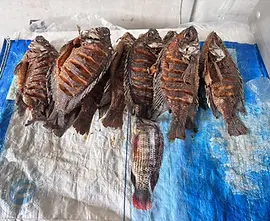
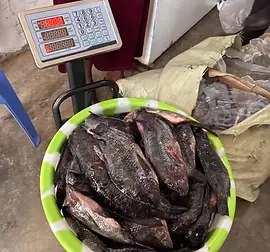
In Kibera, Nairobi’s largest informal settlement, Dorothy, a fried fish shop owner, used to worry about her supply chain from the very outset—without access to cold storage, the value of her fresh fish would diminish hour by hour. Dorothy’s predicament is emblematic of a broader crisis: Africa’s cold chain infrastructure remains critically inadequate. In agriculture alone, inefficient supply chains result in the loss of up to 50% of food produced during transport and storage. This lost food could feed an estimated 300 million people[1].In Rwanda, for example, food wastage is equivalent to 21% of the nation’s land use, 16% of its greenhouse gas emissions, and 12% of its annual GDP[2].
01
When Urban Meets Rural
The Surge in Cold Chain Demand
02
Innovation in Action
From Cooling Hardware to Smart Ecosystem Nodes
03
Prometheus Africa Spark Phase I project
Visible Change and Impact
04
The Future is Here
Infinite Possibilities and Vision for Cold Chain Networks
50%
Food lost produced during transport and storage
300million
people the lost food could feed
01
When Urban Meets Rural
The Surge in Cold Chain Demand
As urbanization accelerates in Africa, demand for fresh food is growing rapidly. However, cold chain infrastructure development lags far behind this consumption upgrade, resulting in severe supply chain disruptions. The absence of cold chain systems not only causes massive waste but also hinders value addition in agriculture, fisheries, and other foundational industries, becoming a critical bottleneck for regional economic and social development. More alarmingly, about 90% of micro and small food vendors cannot afford basic refrigeration due to financial constraints (FAO, 2022; IIR, 2020)[3][4]

02
Innovation in Action
From Cooling Hardware to Smart Ecosystem Nodes
Today, standalone refrigeration units are being transformed through the 'Hardware-as-channel' innovation, imbued with new ecosystem value. By integrating smart hardware with IoT and fintech, cold chain equipment is upgraded into multifunctional service terminals capable of data collection, remote monitoring, and operational management. For users, flexible payment models significantly lower entry barriers; for equipment suppliers and platform operators, sustained service revenue and real-time operational data create long-term value surpassing one-time sales. Moreover, the operational data collected enables supply chain optimization and innovative financial services (e.g.,credit assessment, loans, and novel financing), opening new avenues for inclusive finance for small-scale entrepreneurs.
03
Prometheus Africa Spark Phase I project
Visible Change and Impact

The Prometheus Africa Spark Phase I project, launched by Prometheus Tech, centers on 'essential consumption plus clean energy.' By pioneering cold chain infrastructure innovation in Kenya, the project has delivered measurable social and economic benefits. Its two sub-projects—Cooling Inn and BonPop—target fisheries supply chains and community cold beverage retail, respectively, achieving contextual empowerment:

Today, standalone refrigeration units are being transformed through the 'Hardware-as-channel' innovation, imbued with new ecosystem value. By integrating smart hardware with IoT and fintech, cold chain equipment is upgraded into multifunctional service terminals capable of data collection, remote monitoring, and operational management. For users, flexible payment models significantly lower entry barriers; for equipment suppliers and platform operators, sustained service revenue and real-time operational data create long-term value surpassing one-time sales. Moreover, the operational data collected enables supply chain optimization and innovative financial services (e.g.,credit assessment, loans, and novel financing), opening new avenues for inclusive finance for small-scale entrepreneurs.

Cooling Inn
focuses on the fisheries supply chain, providing 'solar + energy storage + ice cabinets + digital management systems' and low-barrier leasing models. This significantly extends the shelf life of catches, reduces spoilage rates, and boosts incomes for fishers and wholesalers. IoT-enabled cabinets monitor equipment statusand transaction data in real time, ensuring operational transparency, risk control, and fair profit distribution. The accumulated operational data also serves as reliable credit proof, enabling women entrepreneurs like Dorothy to access their first formal loans, advancing inclusive finance.

The Prometheus Africa Spark Phase I project not only popularizes cold chain equipment and digitizes supply chains but also creates new employment and income opportunities for micro-entrepreneurs, enhancing community economic resilience and setting a benchmark for African livelihood infrastructure and inclusive finance innovation.
04
The Future is Here
Infinite Possibilities and Vision for Cold Chain Networks

As the cold chain revolution gains momentum in Africa, achieving fundamental reductions in food loss has become a global priority. UNEP continues to track progress worldwide, noting that mere data measurement is no longer sufficient—systemic innovation is increasingly critical[5]. FAO’s report Sustainable Food Cold Chains: Opportunities, Challenges, and the Way Forward highlights fintech as a key enabler for sustainable cold chain development, with digital and mobile financial services poised to bridge financing gaps for small producers and businesses in developing regions[6]. Dorothy’s story exemplifies how technological innovation and ecosystem collaboration can create new opportunities for ordinary entrepreneurs to improve their lives.
Click the video to watch the transformation of Dorothy's 'Dream Fish Shop'

References
[1] García, N. M., Giraldo, V. R., & Miquel, J. V. (2024, September 10). Exploring the potential and overcoming the challenges of cold chain in Africa. ALG.
[3] IIR. The Role of Refrigeration in Worldwide Nutrition—6th Informatory Note on Refrigeration and Food. International Institute of Refrigeration. 2020. https://iifiir.org/en/fridoc/the-role-of-refrigeration-in-worldwide-nutrition-2020-142029
[4] Makule E, Dimoso N, Tassou SA. Precooling and Cold Storage Methods for Fruits and Vegetables in Sub-Saharan Africa—A Review. Horticulturae. 2022; 8(9):776.